
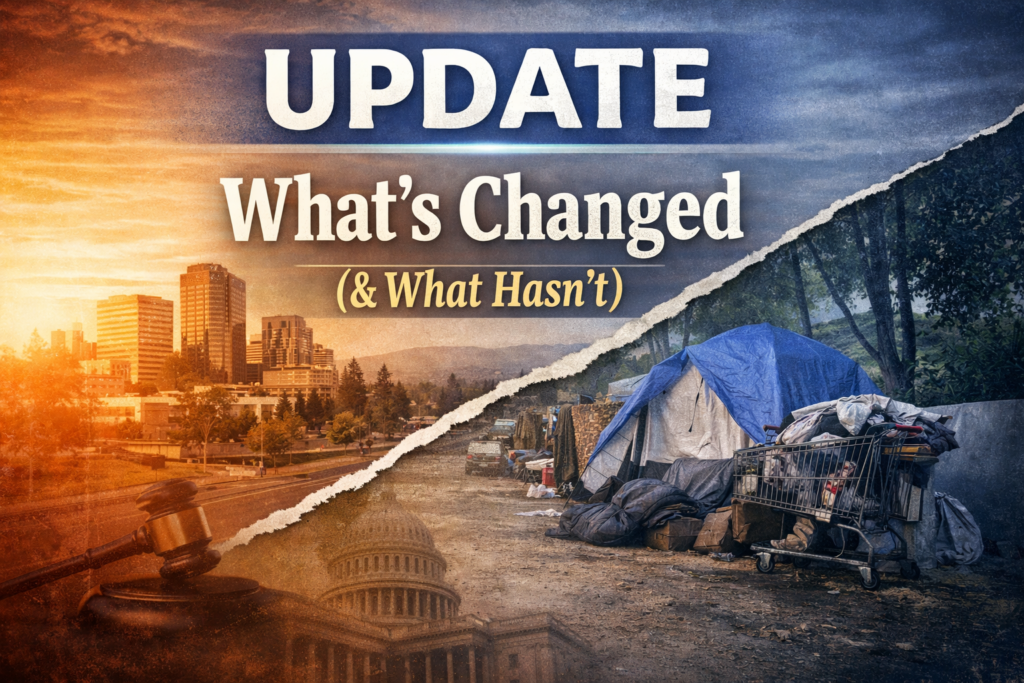
A couple of months ago, I published a blog post titled “When Housing Becomes the Answer to Everything—and Solves Nothing.” In that article, I reflected on the growing assumption that homelessness is primarily a housing supply issue and questioned whether decades of housing-first policy have truly addressed the deeper causes of suffering on our streets.
Since then, an important legal development has added to the national conversation.
A federal judge recently issued a preliminary injunction that temporarily halts HUD’s proposed changes to the Continuum of Care homelessness funding program while a lawsuit challenging those changes proceeds through the courts. For now, the existing funding rules remain in place.
You can read more background on the broader policy debate in this article from the Daily Wire:
“More Spending, More Suffering: The Failure of America’s Homelessness Policy.”
https://www.dailywire.com/news/more-spending-more-suffering-the-failure-of-americas-homelessness-policy
It is important to understand what this ruling does — and does not — mean.
The decision does not declare that current homelessness policy is succeeding. It does not reverse rising homelessness numbers. And it does not resolve the larger debate about whether increased federal spending and housing-first strategies are producing lasting restoration.
It simply maintains the status quo while the legal process continues.
At Medford Gospel Mission, we continue to see firsthand that homelessness is rarely just about the absence of housing. Many of the men and women I encounter are battling addiction, untreated mental illness, trauma, broken relationships, and deep spiritual disconnection. Housing is important. Shelter is essential. But housing alone does not restore a life.
A paused policy change is not solving suffering.
Maintaining funding streams does not automatically produce transformed lives.
As the national policy debate continues, our focus remains the same: to reach the lost and gather the reached. Walking alongside men and women with compassion, pursuing long-term relational restoration through asset-based, accountable discipleship—centered on the Gospel of Jesus Christ and lived out in partnership with the local Church.
Partner with us in God’s work of relational restoration.