
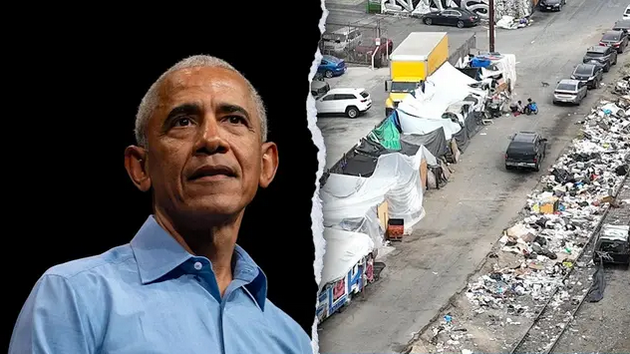
Recently, former President Barack Obama described America’s homelessness crisis in stark moral terms.
“It is morally… an atrocity that in a country this wealthy, people are living on the streets.”
Few people who work directly with the homeless would disagree.
Anyone who has spent time walking through encampments, working in shelters, or sitting across the table from someone trying to rebuild their life understands the human tragedy behind homelessness. These are not statistics. They are men and women whose lives have unraveled through addiction, trauma, mental illness, broken relationships, and years of instability.
What makes Obama’s comments particularly notable is that they come from a leader whose administration helped shape the dominant national strategy for addressing homelessness.
In 2013, the federal government formally embraced what became known as Housing First. The policy prioritized placing people experiencing homelessness into permanent housing without requiring sobriety, treatment, or participation in recovery programs first. The theory was simple: once people were housed, stability would follow, and deeper issues could be addressed later.
For many policymakers, Housing First was seen as the compassionate and practical answer to homelessness.
More than a decade later, the reality on the streets has forced a difficult conversation.
In the same discussion where Obama called homelessness an “atrocity,” he also acknowledged something many Americans are experiencing firsthand:
“The average person doesn’t want to have to navigate around a tent city in the middle of downtown.”
He also warned that telling the public nothing can be expected of people living on the streets is “not going to be a sustainable strategy politically.”
Across much of the West Coast, this tension is impossible to ignore. Cities like Portland, Seattle, Los Angeles, and San Francisco have spent billions of dollars addressing homelessness. Yet tent encampments, public drug use, and unsheltered homelessness have continued to grow.
Communities want to help people who are suffering. But they are also asking a very reasonable question:
Why does it seem like the more money we spend, the worse the problem becomes?
Here in Southern Oregon, we see the same struggle playing out on a smaller scale.
Encampments appear along greenways and riverbanks. People sleep in vehicles in parking lots. Others move from temporary camp to temporary camp, carrying everything they own in a backpack or shopping cart.
The suffering is real. But so is the deeper reality behind it.
After years of working directly with people in crisis, we have learned something that policy discussions in Washington often overlook:
Homelessness is rarely just a housing problem.
Many of the men and women who come through the doors of the Medford Gospel Mission are not simply lacking a roof over their heads. They are battling addiction, untreated mental illness, trauma, broken relationships, and years—sometimes decades—of instability.
These are not problems that can be solved simply by handing someone a key.
An apartment cannot heal addiction.
A housing voucher cannot rebuild trust.
A lease agreement cannot restore a broken life.
What truly changes lives is something far deeper: relationships.
When someone enters recovery, they enter a community. They receive mentorship. They rebuild accountability. They learn how to live differently. They begin repairing the relationships that were broken along the way.
This kind of transformation takes time.
It takes accountability.
And it takes people who are willing to walk alongside someone through the difficult work of rebuilding their life.
That is why the work of rescue missions across the country often looks different from many government programs. Our focus is not simply on placement. It is on restoration.
Because the goal is not simply to move someone from a tent into an apartment.
The goal is to help them rebuild a life that will keep them from returning to the streets.
Housing may provide shelter for a season. But lasting change happens when a person finds community, purpose, accountability, and hope.
Relational restoration changes lives—Housing First has too often failed to even change people’s address.
Partner with us in God’s work of relational restoration.